Slovenščina
  Hrvatski
  Italiano
  Deutsch
Bad Breath, a Strange Taste in the Mouth, and Bleeding Gums – One of the Most Common Gum Diseases May Be Behind Them

Bad Breath, a Strange Taste in the Mouth, and Bleeding Gums – One of the Most Common Gum Diseases May Be Behind Them

We are happy to share our knowledge with you and through expert advice we want to educate you about the importance of oral health care and the possibilities that modern dentistry offers you at our center. Get in touch with us on +385 1 4059 749 or you can reach us on our free UK number at +44 800 08 68 414. You can also email us at info@drstimac.com.
Alongside tooth decay, periodontitis is one of the most common diseases in modern dental medicine. In most cases, the reason lies in ignoring the initial symptoms and allowing the disease to progress without adequate therapy and treatment. It is a serious condition that, without timely and appropriate care, can lead to tooth loss and increase the risk of heart attack, stroke, and other serious health problems.
Periodontal diseases were once largely considered incurable, and tooth loss was widely accepted as inevitable. In recent years, however, dentistry has seen some of its greatest advances in the field of periodontology. Thanks to new treatments and therapeutic methods, if treatment begins in time, it is possible to stabilize teeth and heal inflamed gums.
Gingivitis as the first warning sign
The early stage of periodontitis is gingivitis, or inflammation of the marginal part of the gum. The most common cause of gingivitis—and later periodontitis—is poor oral hygiene. When the oral cavity is not maintained properly, plaque accumulates on the teeth. Over time, this plaque turns into tartar. Along with food debris left in the mouth and the absence of proper oral hygiene, new bacteria develop, causing the first symptoms of inflammation.
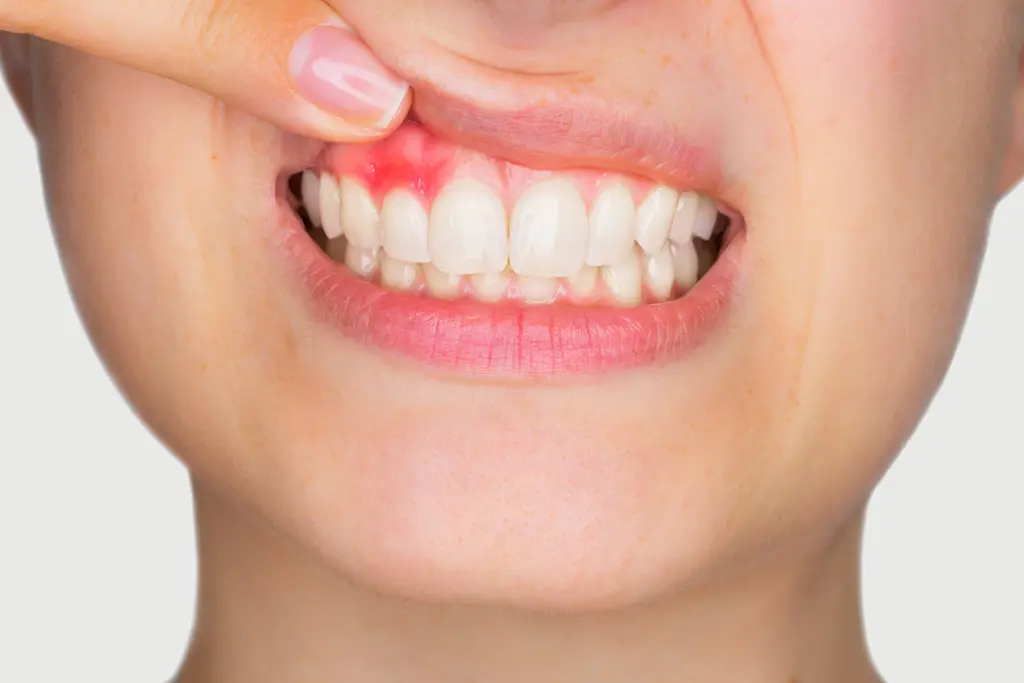
The most common symptoms of gingivitis are:
- widening of the space between the teeth and gums,
- thickening and redness of the gums,
- mild gum bleeding.
Although these changes are painless in most cases, it is important to react immediately and visit a dentist so the inflammation does not spread further. If the inflammation progresses and reaches deeper structures, periodontitis develops, and its treatment is more intensive and long-lasting.
Treatment of gingivitis
Treatment of gingivitis includes cleaning the teeth and gums to remove plaque and deposits. To effectively remove plaque and tartar, different mechanical and manual instruments are used, applying pressure to eliminate all buildup.
Good oral hygiene at home is also essential afterward and includes proper and thorough toothbrushing, gum massage with a quality toothbrush, the use of interdental brushes, dental floss, and mouthwash.
How does periodontitis develop?
The symptoms of gingivitis are mostly superficial, and patients often do not even notice the changes affecting their teeth and gums. However, if these symptoms are ignored, the teeth and gums begin to separate, creating periodontal pockets. In periodontitis, the inflammation is much more severe, the symptoms are very noticeable, and they are often painful.
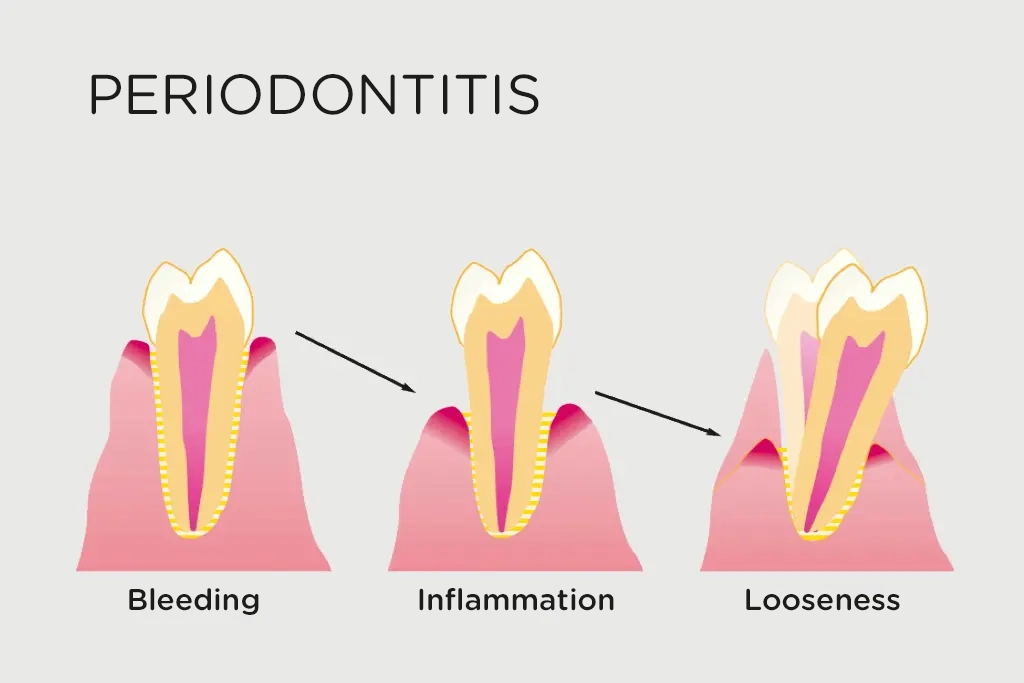
The most common symptoms of periodontitis are:
- bad breath,
- a strange taste in the mouth,
- swollen gums,
- redness around the teeth,
- gum recession,
- loose teeth,
- bleeding gums.
Periodontal diseases can lead to serious health consequences if there is no timely response.
Treatment of periodontitis
While gingivitis treatment is mainly superficial, periodontitis requires the removal of plaque and tartar around periodontal pockets, meaning below the gum line. Since it is usually a severe inflammation, the inflammation of the gum tissue must first be reduced and its surface treated before the pockets can be cleaned.
Once the inflammation has calmed down, the dentist continues treatment using curettes—manual instruments that enter the periodontal pockets and perform scaling and root planing around the tooth root. In some cases, periodontitis can be very advanced, and after periodontal therapy, surgical treatment may also be needed. At our center, this is handled by oral surgeons whose goal is to restore and regenerate gum tissue and bone using substitute materials and membranes in order to reduce pocket depth. Even in cases of exposed tooth roots, our surgeons can help by covering the exposed area with connective tissue.

In some cases, not even surgical treatment can fully restore the aesthetics or function of the teeth and tissues. At that point, we may consider making a fixed dental bridge that connects the teeth, improves aesthetics, and stops their mobility. If a person has lost one or more teeth due to this disease, dental implants may be the solution to prevent further progression of the condition and loss of jawbone.
Timely action is the most important thing
You should choose periodontal treatment first and foremost to save your teeth. Timely arrival for a professional examination is crucial. Thanks to new treatments and methods, it is now possible to prevent the progression of periodontal disease.Our qualified experts, led by Dr. Maja Jagodić Štimac, DMD, will ensure that your periodontal treatment is fully tailored to you and, most importantly, completely painless.
If you’re thinking about improving your health and feeling better in your own skin, now is the perfect time to start. Get in touch with us on +385 1 4059 749 or you can reach us on our free UK number at +44 800 08 68 414. You can also email us at info@drstimac.com, or fill in our online form.