Slovenščina
  Hrvatski
  Italiano
  Deutsch
Do You Know All the Ways an Edentulous Jaw Can Be Treated?
Do You Know All the Ways an Edentulous Jaw Can Be Treated?

We are happy to share our knowledge with you and through expert advice we want to educate you about the importance of oral health care and the possibilities that modern dentistry offers you at our center. Get in touch with us on +385 1 4059 749 or you can reach us on our free UK number at +44 800 08 68 414. You can also email us at info@drstimac.com.
Repairing or replacing a single tooth is a smaller procedure in the mouth, usually focused on restoring aesthetics or function in one specific area of the jaw. But what happens when the entire jaw needs to be reconstructed? Dentures are no longer considered an ideal option for achieving a new smile and restoring your previous quality of life. In these cases, when a smile must be rebuilt “from scratch,” modern methods of permanently treating edentulism come into focus. Each of these solutions is specific in its own way. Which solution is appropriate for a particular dental situation does not depend only on the patient’s wishes, but also on the clinical indications for that patient. All of the options listed below are high-quality solutions for edentulism:
- Semi-fixed options
- All-on-4
- All-on-6
Why choose dental implants?
A dental implant is a permanently fixed solution if you are missing teeth. Implants are the closest possible substitute for natural teeth, and they behave like natural teeth as well. They restore all oral and aesthetic functions, and their placement brings back your smile, your confidence, and improves your overall quality of life. In addition to functioning and looking like natural teeth, implants also prevent the resorption of remaining bone and allow a person to preserve healthy natural teeth, meaning they can avoid the grinding down of healthy adjacent teeth.
Implantology is one of the branches of dental medicine that has advanced the most in recent years, and at Štimac Center we focus specifically on the most modern and effective fixed solutions in cases of missing teeth. In our work, we use only premium implants that meet the highest global standards according to all World Health Organization-related quality benchmarks. In recent years, premium BEGO implants have shown the best results in terms of quality and success rate, which is why we use them most often and with the greatest confidence. We are also an official BEGO training center.
Why is it so difficult to adapt to conventional dentures?
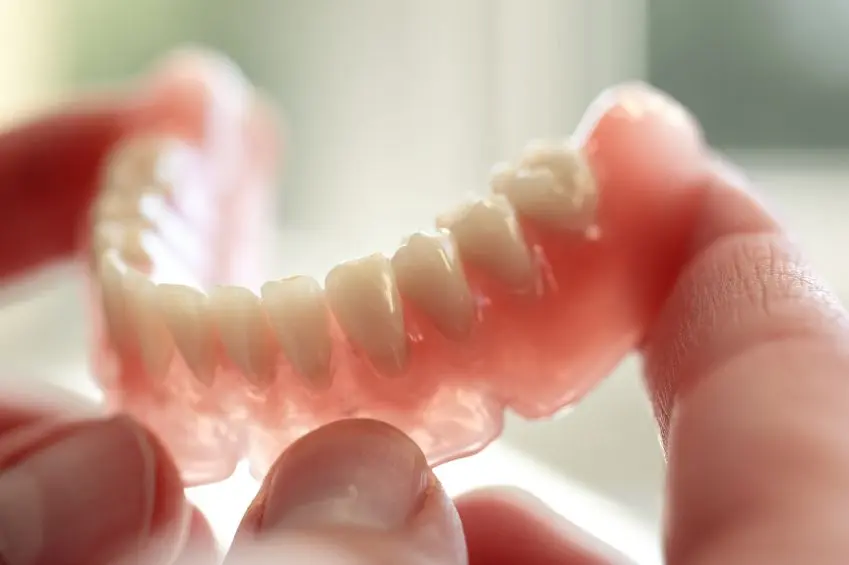
A denture stays in the mouth by resting only on the soft tissues and the palate. Its support is loose, which is why patients often find it difficult to adapt. Conventional dentures can slip, fall out, and cause sore spots, and they are not the best solution for a beautiful smile either.
Semi-fixed options for edentulism
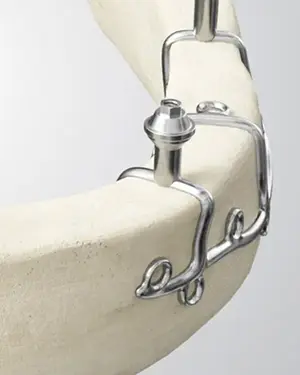
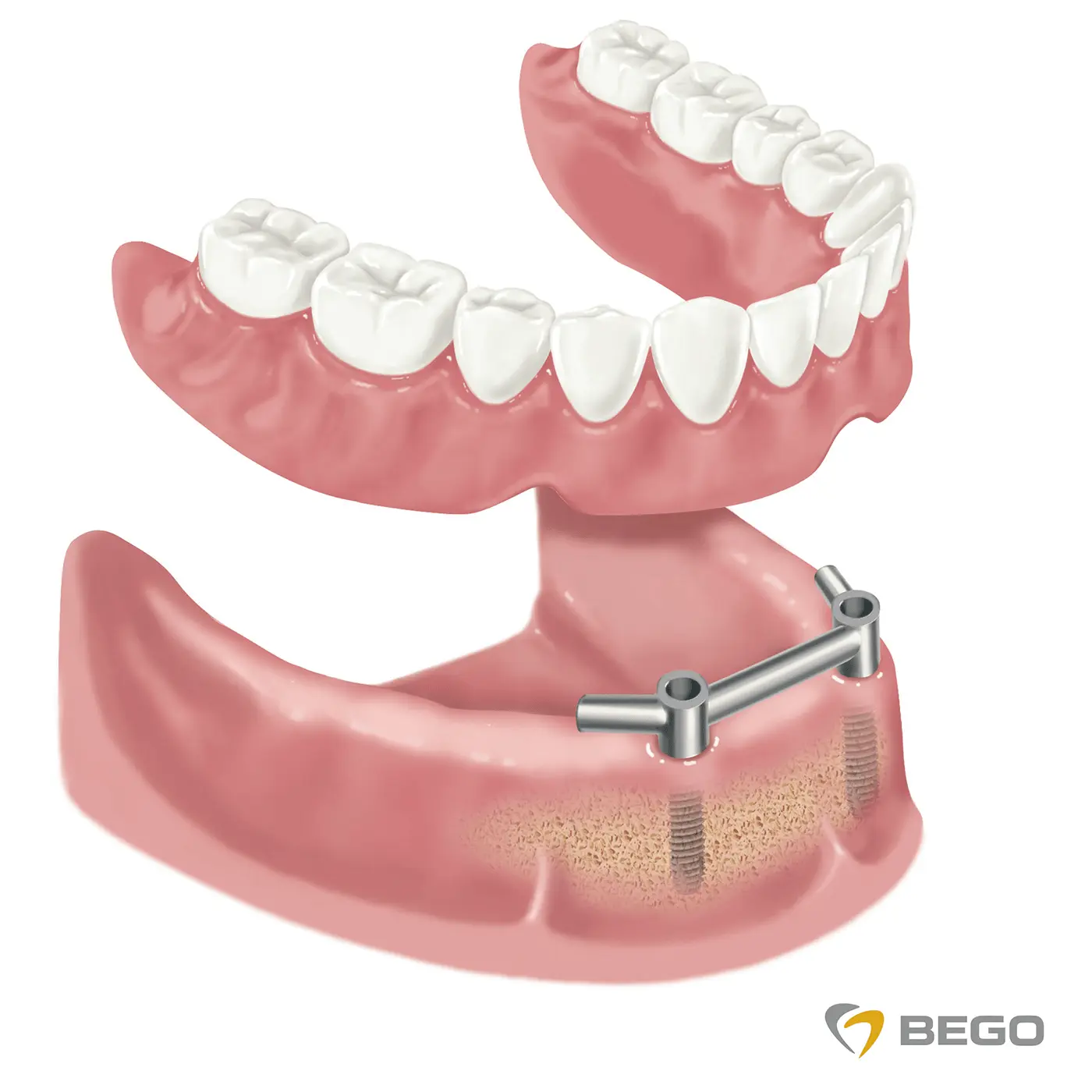
The first step forward compared to a traditional removable denture is a semi-fixed solution for edentulism using two implants in the jaw, onto which a hybrid dental bridge is attached. The option of two implants with a connecting bar is possible only in the lower jaw—in the upper jaw, four implants are usually placed. A so-called hybrid bridge is then attached to this bar. The hybrid bridge is firmly retained on the implants and is much more stable than a conventional removable denture, but it still remains removable. This solution may be suitable for people who simply do not have enough bone volume and strength—even with the possibility of bone grafting—for a fully fixed solution in the jaw. This semi-fixed option is also more economical financially, while still being a very good and reliable way to solve edentulism. Semi-fixed solutions also include the option of locator attachments, meaning implants that already have a connector for the hybrid bridge built into them. Which semi-fixed option is best for your dental situation is determined by the expert based on an examination and diagnostic assessment of your dental condition.
 Source: booking.dentist
How does All-on-4 work?
The second step forward compared to removable dentures is today’s very popular All-on-4 method. With this method, in the upper or lower jaw—or both—we create a dental restoration (a dental bridge) that is fixed onto four dental implants. All-on-4 is also popular because it is the most cost-effective fixed solution for an edentulous jaw.
The procedure is preceded by detailed diagnostics, possible extraction of remaining teeth, and, if necessary, reinforcement of the jaw using artificial bone grafting. In one day, during a single visit, we place four dental implants into your jaw. The placement of one implant takes around 15 minutes, which means that the first visit—the entire procedure including possible extractions, placement of four implants, anesthesia, and consultation with the doctor—lasts approximately two hours. The front two implants are placed vertically in the jaw, while the back two are placed at an angle of 35 to 45 degrees. This special placement technique allows implantation even in people who do not have enough bone volume for conventional implant placement.
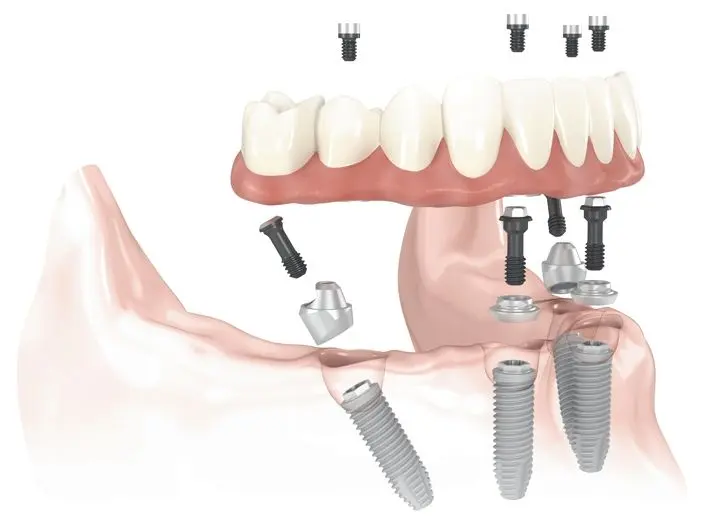
Depending on the overall condition of the oral cavity immediately after implant placement, temporary teeth are prepared the same day or within 24 hours and attached to the implants. You wear them until the implants fully integrate with the bone. From that point on, you no longer need to worry about your dental situation or the reduction in quality of life caused by edentulism, because with temporary teeth, normal chewing is possible immediately—on the very same day. After three to four months, once the osseointegration process is complete, you come in for the placement of the final restoration. We check the stability of the implants and take impressions based on which the final prosthetic work is produced in our dental laboratory.
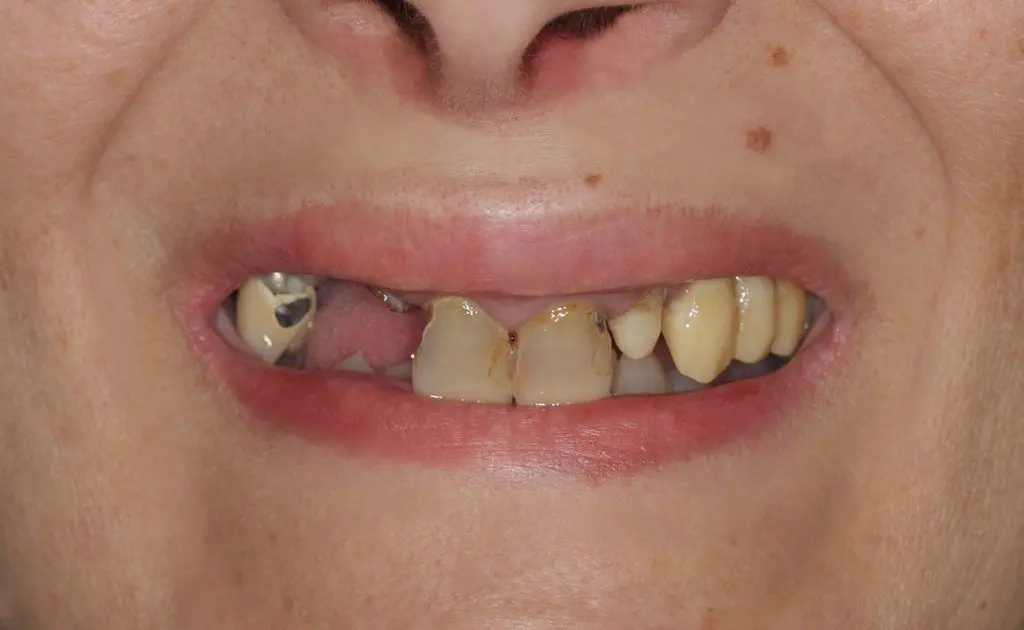
Image: patient before treatment with the All-on-4 method (the procedure was preceded by extraction of remaining non-viable teeth)
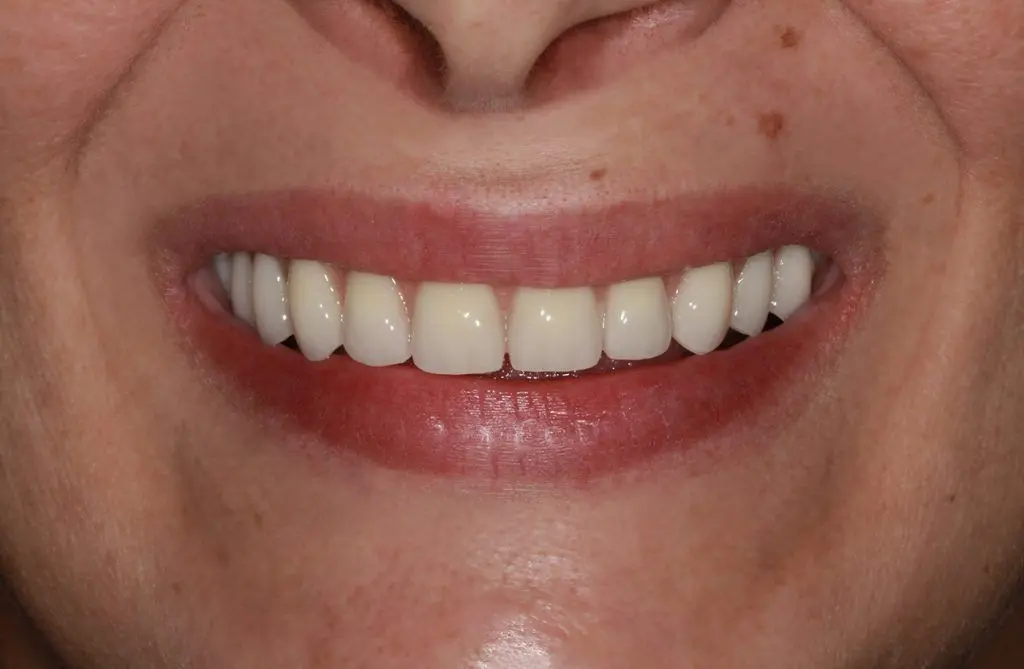
Image: patient after placement of the final fixed restoration
What is All-on-6?
As the best solution for an edentulous jaw in cases of good bone volume and structure, we recommend the option of a fixed dental bridge supported by 6 implants. Functionally and aesthetically, this can be considered the most advanced version of a fixed prosthetic restoration on implants. It fully satisfies even patients with very high aesthetic expectations.
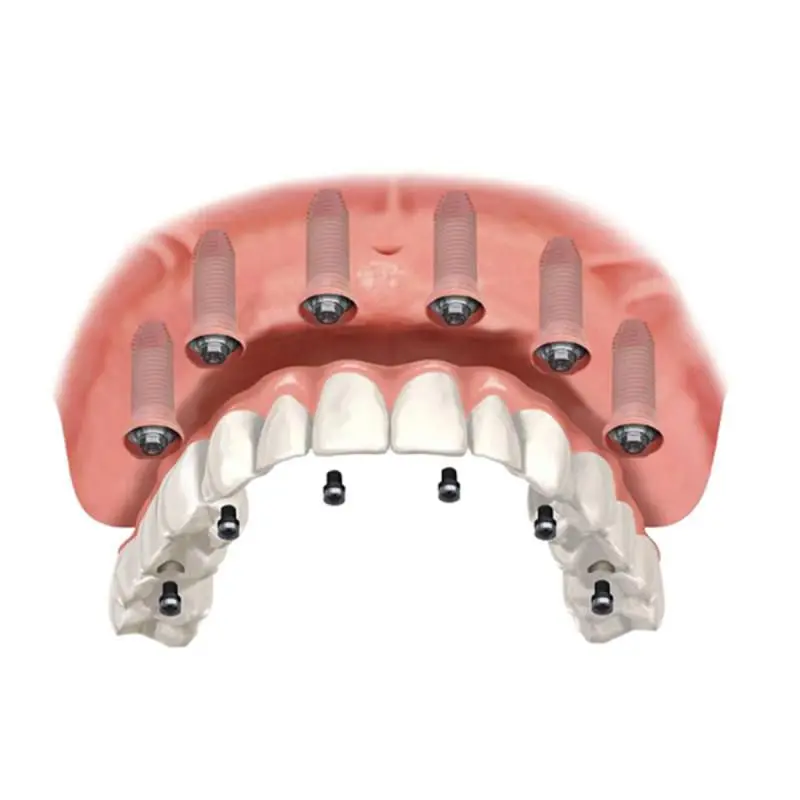
Source: booking.dentist
As a rule, it is always better to have as many supports as possible for a prosthetic restoration. However, it should be kept in mind that in some patients, due to low bone quantity or poor bone quality, the number of implants that can be placed is limited. Which solution is appropriate for you is determined together with your oral surgeon during a detailed diagnostic examination using X-rays and CT imaging.