Slovenščina
  Hrvatski
  Italiano
  Deutsch
Everything You Need to Know About Tooth Extraction

Everything You Need to Know About Tooth Extraction

We are happy to share our knowledge with you and through expert advice we want to educate you about the importance of oral health care and the possibilities that modern dentistry offers you at our center. Get in touch with us on +385 1 4059 749 or you can reach us on our free UK number at +44 800 08 68 414. You can also email us at info@drstimac.com.
Modern dentistry focuses on preserving your natural teeth and preventing tooth loss whenever possible. Before any discussion about possible extraction, a detailed X-ray diagnosis is performed, along with an assessment of whether the tooth can be treated using endodontic methods. In other words, tooth extraction is never our first option, and we do not give up easily when it comes to saving your natural teeth. However, if you do find yourself in a situation where one or more teeth need to be removed, there is no need to despair. Tooth extraction is a standard oral surgical procedure, and there are several options available to restore the full aesthetics and function of your smile afterward.

When is tooth extraction really necessary?
With appropriate periodontal treatment, we can often save teeth that are at risk of completely losing their function and vitality. A treated tooth with restored function and vitality can serve you for many years and can even support a dental crown or bridge if you decide to reconstruct your smile. Tooth extraction is necessary in the following situations:
• Tooth damage caused by decay is so extensive that even the root cannot be used
• The tooth is affected by advanced periodontitis, is loose, and much of its internal structure is visible above the gum line
• The tooth is so badly damaged, with large parts of the crown missing, that it cannot be saved by endodontic treatment
•The tooth has a major root fracture, and complete breakage is only a matter of time
• There is a large inflammatory process, such as a granuloma or cyst, affecting the bone around the root
• The tooth is genetically weak or weakened due to trauma and cannot support a prosthetic restoration such as a crown or veneer
• The tooth is causing severe crowding in the mouth—this issue is especially addressed by orthodontists
• Wisdom teeth are causing problems because of their position, such as pain, gum inflammation, or crowding in the jaw
What does tooth extraction look like?
Tooth extraction is an oral surgical procedure in which the tooth and/or its remnants are removed from the tooth socket, known as the alveolus. For you, the procedure is painless because it is performed under local anesthesia, so you do not feel pain or discomfort during the treatment itself.
A small wound will remain in the mouth, which we will dress, and it will heal soon afterward. You will receive detailed aftercare instructions from your dentist depending on the size of the procedure and your individual dental situation.
What does oral hygiene look like after tooth extraction?
It is important to follow your dentist’s instructions after an extraction to avoid complications such as dislodging the blood clot during healing, pain, infection, or bleeding. Your dentist will advise you to:
• avoid touching the wound and apply cold compresses to the cheek,
• take pain relief medication that is not aspirin-based if pain occurs after the procedure,
• avoid rinsing the wound for 24 hours after extraction so the blood clot is not washed away,
• brush gently and remove bacteria around the extraction site,
• be careful with hard foods, alcohol, and hot or carbonated drinks
Why is it important to replace a lost tooth as soon as possible?
When all teeth are present, they support one another and remain stable in place. Missing teeth create large gaps into which neighboring teeth can begin to shift.
This movement creates even more space for the other teeth to move, which can eventually affect the entire bite. Over time, it may become impossible to place a new tooth into the original position without touching the neighboring teeth.
At that point, the adjacent teeth may also need to be prepared, their position and shape may change, and the treatment becomes not just a reconstruction of one tooth, but of the entire dental arch.
How can an extracted tooth be replaced?
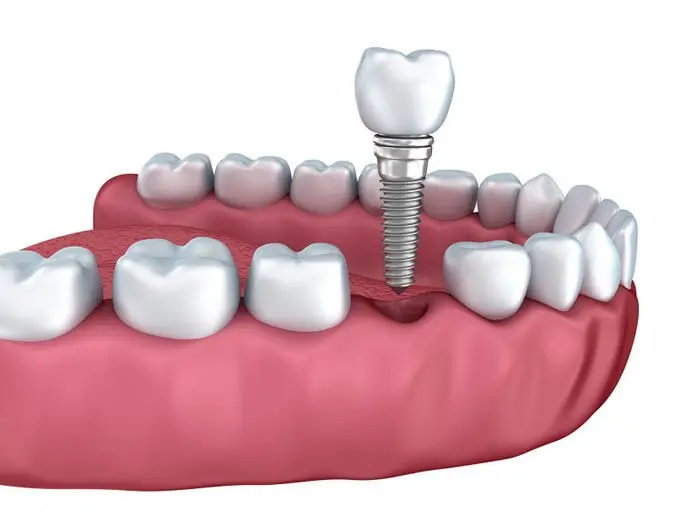
Dental bridges are recommended when one or more teeth are missing or when your existing teeth are significantly weakened and damaged. Bridges are prosthetic restorations made up of multiple units, or crowns. A dental bridge is placed on existing healthy or treated teeth, while the intermediate units fill the empty space between the supporting teeth.
Dental bridges can be used in all age groups. However, when a bridge is placed to replace one or more missing teeth, it is important to note that the surrounding teeth need to be prepared and reduced in order to support the bridge. This is the main difference compared to dental implants, where the neighboring teeth remain untouched. In addition to dental bridges, dental implants are now one of the most common ways of replacing missing teeth. They solve all the problems caused by missing teeth without damaging adjacent teeth, which is their greatest advantage.
You can learn more about dental implants in one of our previous blog posts.
There is also a solution when all teeth are missing
If you have lost all your teeth over the years, or if your remaining teeth need to be extracted, permanent fixed solutions such as All-on-4 and All-on-6 can restore the teeth you are missing. They are also a great option for people who struggle with dentures and cannot adapt to them. The biggest advantage of All-on methods is their cost-effectiveness compared to placing a larger number of individual implants.
A full bridge on 4 implants, the so-called All-on-4 method, is a solution for edentulous patients—whether one or both jaws are affected—in which a dental bridge is fixed onto 4 dental implants. The special technique of placing implants at specific angles in the All-on-4 method allows treatment even for patients who do not have enough bone volume for the classic placement of individual implants.
Read more about this modern solution for edentulism on our website. If you need tooth extraction, contact our experts and book your appointment for a free first examination and consultation.