Slovenščina
  Hrvatski
  Italiano
  Deutsch
Tourist attractions in the City of Zagreb
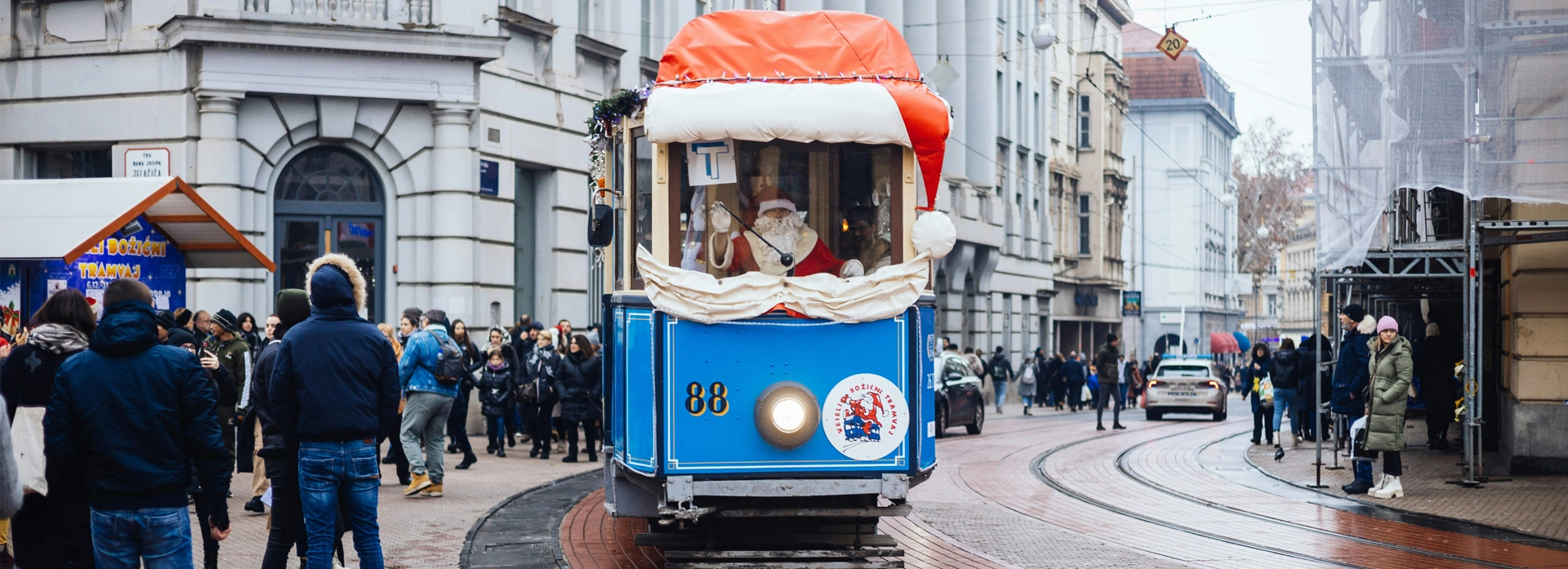
Tourist attractions in the City of Zagreb
We are happy to share our knowledge with you and through expert advice we want to educate you about the importance of oral health care and the possibilities that modern dentistry offers you at our center. For all other information, you can always contact us at info@drstimac.com or call us at +385 1 36 33 602
Zagreb, the capital city of Croatia, has become a major European tourism hub. Many tourists, both from Europe and across the world, visit Zagreb every year, discovering the magic and beauty of this historic city. Presented below are some of the most visited sites and some of the main attractions in Zagreb.
Upper Town
Beautifully tiled streets and red roofs in this area of Zagreb make the Upper Town a favorite attraction for all visitors. It is in the Upper Town that tourists start their tours, with St. Mark Square and St. Mark Church with its colorful roof, the popular Tkalčić Street offering a host of cafés and restaurants, and the Stone Gate being the most notable landmarks among many others. The Croatian Parliament and Banski dvori, the headquarters of the Croatian Government, are also located here as an inevitable part of any city tour.
Museum of Broken Relationships
Among the many “regular” museums operated by the City of Zagreb, the Museum of Broken Relationships is a unique one and a favorite for both tourists and the locals. A variety of items are exhibited here, each of them telling an unfortunate love story and symbolizing the end of a romantic relationship. These items have been donated to the Museum by lovers and partners from across the world, their stories sad, amusing, humorous and always interesting.
Stone Gate
As mentioned above, the Stone Gate is one of the main landmarks in the Upper Town neighborhood of Zagreb. Dating back to the 13th century, this gate is the only remaining original town gate, built as part of the town’s defense system. After a horrible fire in the 18th century, a chapel was built here and devoted to the town’s guardian, the Madonna of the Stone Gate, whose image remained undamaged and complete after the fire.
Maksimir Park
Adorned by wonderful greenery and featuring a belvedere offering an unforgettable view of the city, two pavilions and a zoo, Maksimir is the largest part in the City of Zagreb. This park also has a number of walking and jogging paths and trails, making it one of the best places for relaxation, recreation or a family picnic. Named after Bishop Maksimilian Vrhovac who initiated its development, the park was opened in the late 18th century.
Botanical Garden
In addition to Maksimir, Zagreb offers many other wonderful green areas, notably the Botanical Garden. Its initial blueprints dating back to 1889, this garden was initially a research zone used by the University of Zagreb. Today, the Botanical Garden is a green oasis filled with all kinds of plants, where people come to relax, escape the steaming streets of Zagreb, and enjoy colorful flowers and nature.
What else does Zagreb have to offer?
Tourists mostly visit Zagreb for its beautiful landmarks, monuments and buildings, as well as its rich history permeating the entire city. Interestingly enough, fun and landmarks are not the only reasons why they arrive in this city. The Croatian capital is also known for its excellent and well-developed dental tourism services. The prices offered both in Zagreb and the rest of Croatia are often much lower than those offered abroad, while service quality is on a very high level. For example, dental prosthetics are a highly demanded dental tourism service and the reason for many visits to Zagreb.
The history of Zagreb
The location of the present city had been inhabited for a long time before it became the City of Zagreb – evidence of human presence found on the south slopes of Medvednica is 50-80 thousand years old, whereas human settlements discovered around Sava River date back to the 6th and 5th centuries BC.
Beginnings of the city
Initially, different tribes attacked the residents of this area, but the attacks stopped after the Roman settlement of Andautonia was built. Andautonia was a cultural and political hub of this part of Pannonia until the 4th century when people began to desert it, leaving it to be eventually destroyed by the Huns, Goths and Lombards during the Great Migration. The Avars and Slavs arrived here during the 6th and 7th centuries, and the preexisting population accepted their Slavic language and customs, including Christianity. The following centuries were perhaps the most critical ones in the history of Zagreb – two hills, Gradec and Kaptol, became urban settlements.
Kaptol and Gradec
Kaptol has been inhabited since ca. the 10th century when King Ladislav established the Zagreb Bishopric and pronounced Kaptol the seat of the Bishop. The existing church was converted into a cathedral, which was destroyed during the Mongol invasion in 1242 and then rebuilt in 1263. In the 9th century, they built a fortification on the other hill, but the first written record of the town dates back to as late as 1241 when Gradec was awarded the status of a free royal town and presented with a Gold Bull by King Bela IV. The citizens were then vested with various rights and responsibilities in exchange for defensive walls built around the city to protect it against potential Mongol invasions. These two cities were not on good terms, often engaging in conflict, and their occasional cooperation was based exclusively on common commercial interests. What eventually united them was not commerce but a dire need – the Turkish invasion of this region forced them to unite, defend themselves and live in peace.
18th and 19th centuries
In the 18th century, Varaždin became the capital city, whereas Zagreb began to lose both its status and its population. After the Ottoman threat started to decline and weaken in the late 18th century, the city gradually began to restore its status and importance and this process peaked in 1850 when Kaptol and Gradec united to form a single city – the present-day Zagreb. This was followed by intensive development of many aspects and areas of human activity: new buildings were erected in the Lower Town, clothes trade revived the city’s industry, and a railway track was being built, which would eventually connect Zagreb with other European capital cities. Culture also blossomed: the city opened the Music Institute and the Croatian National Theater and established the Croatian Academy of Sciences and Arts (HAZU), the University of Zagreb, and Matica Ilirska, a movement designed to revive and promote Croatian culture and literature. However, in the midst of this huge development and prosperity, Zagreb was hit by a devastating earthquake in 1880, which destroyed more than 1500 buildings across the city, including the Cathedral. It was at that time that our famous architect Hermann Bollé initiated and led the process of reconstructing the Cathedral, which continued for more than two decades. At the end of the century, the Mirogoj Cemetery was built, the Cathedral was reconstructed, whereas the wall surrounding it and some of the walls surrounding the Upper Town were demolished, giving Zagreb its present-day appearance.
20th century
Zagreb stepped into the 20th century with a population of more than 60 000 – the city began to develop and expand rapidly, including after Croatia became part of the Kingdom of Serbs, Croats and Slovenes in 1918. During this period, the city’s population increased by as much as 70%. After Croatia proclaimed its independence in 1991, Zagreb became its capital city – the independence proclamation ceremony took place on St. Mark Square in Zagreb.
Zagreb today
Nowadays, Zagreb is the main cultural, educational and administrative center in Croatia and its largest city, accounting for more than a quarter of the country’s overall population. It has continued to grow and develop its cultural and tourism offerings, eventually becoming one of the most popular destinations in Europe. Zagreb has a lot to offer, notably its various services that are superior to those offered in some of the most popular cities in Europe and is now definitely one of the most desirable cities in Croatia in terms of livability. The city offers premium gastro experience in Noel Restauran, the finest accommodations in Esplanade Zagreb Hotel, and the best city tours with Blue Bike Zagreb.